
Making Immutable Memories
What it might mean to never forget

It’s funny how life can take you down unexpected paths. If you’d asked me years ago if I’d be dedicating myself to something like a “Memory Transfer and Access Protocol,” I probably would have looked at you blankly. But life has a way of focusing your attention on what truly matters, often through its most profound challenges.
For me, that challenge, that moment of painful clarity, came through my mother. Watching her full of stories begin to lose her memories to dementia was, and is, heartbreaking. It’s a journey many of you might unfortunately recognize – the slow fading of shared experiences, the erosion of a lifetime’s worth of connections. And with that sorrow came a fear that I think many of us, as we get older, start to grapple with: what if this happens to me? What happens to my memories, the very fabric of who I am?
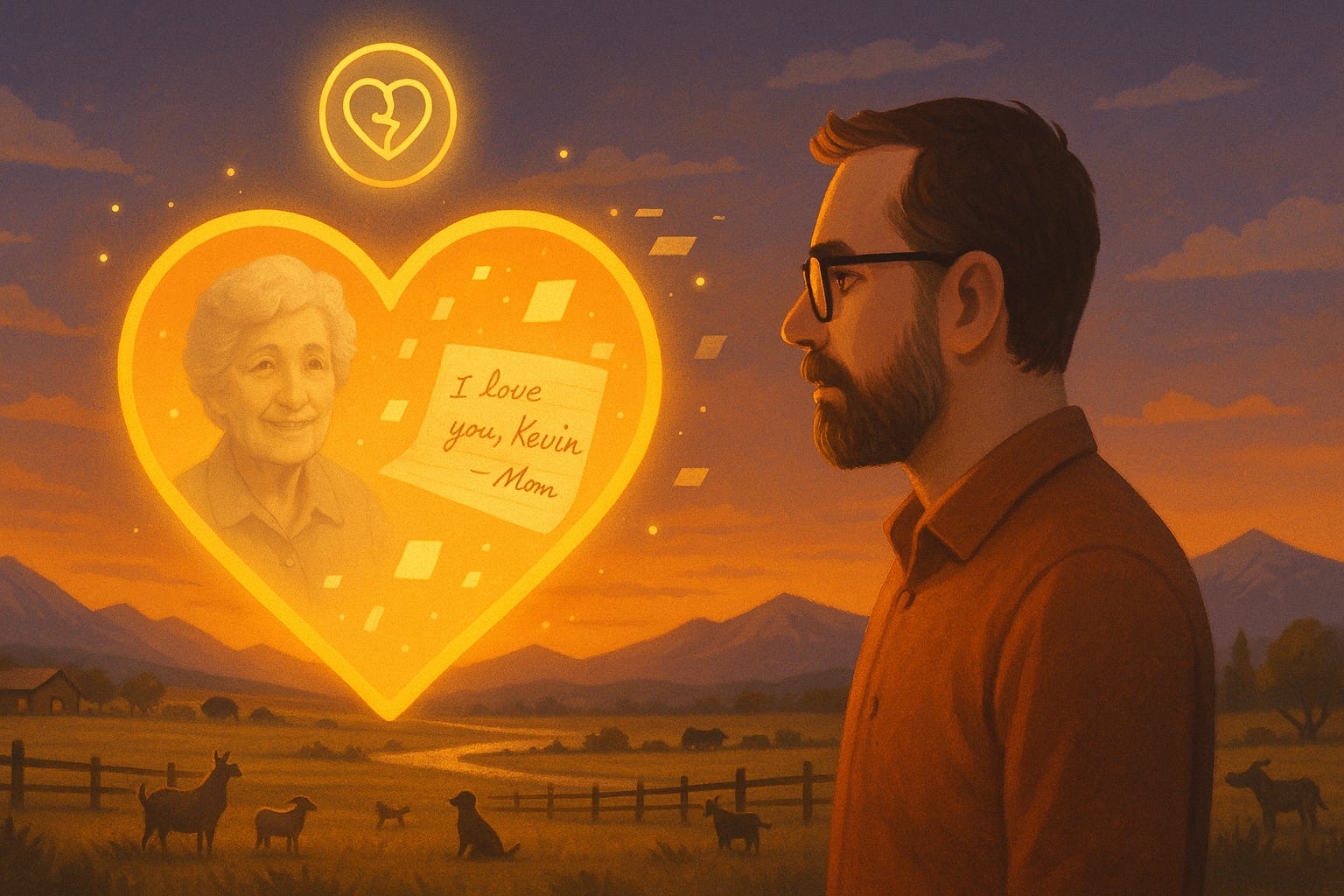
This wasn’t just an abstract concern. It became a deeply personal quest. Our memories aren’t just data points; they are the essence of our identity, our relationships, our understanding of the world. They are, without a doubt, the most important things we possess. And yet, when I looked at the technology surrounding us, I saw a disconnect. In an age where we capture so much of our lives digitally – photos, videos, messages, thoughts – why wasn’t our technology built from the ground up to truly protect and preserve these irreplaceable treasures?
Organizing our digital shoebox
Think about your own digital life. Your photos are likely on your phone, maybe some in a cloud service, others on an old laptop. Your important emails are in one place, your social media memories in another. Videos of your kids, your parents, your own milestones – they might be scattered across different devices, different platforms, some perhaps even inaccessible now (rip myspace,icq,aol)
It’s like we’ve all got these massive digital shoeboxes, overflowing with bits and pieces of our lives, but with no real order, no guarantee of long-term safety, and certainly no easy way to bring it all together, to share it meaningfully, or to ensure it endures.
For someone facing memory challenges, like my mom, this digital chaos is more than just an inconvenience. It’s a barrier. A familiar photo, a snippet of a favorite song, a recorded story – these can be lifelines, moments of connection and comfort. But if they’re lost in the digital ether, they can’t offer that solace.
It struck me that our technology, for all its wonders, wasn’t designed with the sanctity of human memory as a core principle.
A New Foundation
My journey with my mother and a growing understanding of this universal need, led me to a question: What if we could create a better way? What if there was a universal standard, a common language, for how our memories are handled – captured, stored, shared, and, most importantly, protected?
This is the heart of MTAP – the Memory Transfer and Access Protocol.
Now, I know "protocol" sounds technical and maybe a bit dry. But bear with me. Think of it like this: the internet we use every day relies on a fundamental protocol called HTTP. It’s the invisible set of rules that lets all our different devices and websites talk to each other. MTAP aims to be something similar – an "HTTP for human memories." It’s not a single app you download, but a foundational blueprint, a common language that will allow different technologies, apps, and even future AI “agents” (think truly helpful personal assistants) to handle our memories in a way that’s consistent, secure, and, crucially, always under our control.
What Could This Mean for Us?
For You, For Me, For Our Families: Imagine a future where your most treasured memories – the photos from your childhood, the sound of your grandmother’s voice telling her life story, the videos of your kids’ first steps, even important personal reflections – are securely gathered and easily accessible. Not just today, but decades from now. They wouldn’t be lost if you switched phones, if a social media platform disappeared, or if a cloud service went out of business. They’d be preserved in a way that transcends any single company or device.
For Those Walking the Path of Dementia: For someone like my mom, and for the millions like her, MTAP could be the foundation for a new generation of truly compassionate tools. Imagine technology that can gently bring forth familiar memories – a favorite song, a cherished place, the face of a loved one – helping to ground them, spark moments of connection, and ease the anxiety and confusion that so often accompany dementia. For caregivers, it could mean a deeper understanding of the person they’re caring for, enabling more empathetic and dignified support.
You Are in Control – Always: This is non-negotiable for me. A core principle of MTAP is that you own your memories. You decide what’s saved. You decide who can see it, under what conditions, and for how long. This is about digital dignity. It’s about ensuring your personal history, your life’s narrative, remains unequivocally yours.
Building for a More Helpful Future: We’re also designing MTAP with the future in mind, especially as AI becomes more integrated into our lives. Imagine an AI assistant that doesn’t just manage your calendar, but (always with your explicit consent and control) can access relevant memories to help you reminisce, learn from your past experiences, or even make more informed decisions – all while rigorously protecting your privacy.
My personal challenge illuminated a universal need. MTAP is my response, our response – a framework conceived in love, driven by a vision for a future where our technology finally values and protects the most important thing we all possess: our memories.
What we have to get right
I know new ideas bring questions, and they should:
"Is it secure? Can I trust it with my most personal memories?" Absolutely. Security and privacy aren’t just features of MTAP; they are its bedrock. We’re designing it from the ground up with robust encryption, secure authentication, and clear, user-managed rules about consent and data control.
"Sounds complicated. Will I be able to use it?" While the underlying technology of any protocol is complex, the goal for tools and services built on MTAP is simplicity and intuition. The complexity should be invisible to you, the person whose memories are being cherished.
"When can I use this?" MTAP is a foundational technology, like the early building blocks of the internet. It will take time, collaboration, and innovation for developers, companies, and organizations to create new products and services that use this standard. This is the start of a journey, a marathon not a sprint, but one we believe is essential.
A hopeful future
MTAP, for me, is about hope. It’s hope for families like mine, navigating the difficult path of dementia, offering new possibilities for connection and understanding. It’s hope for every individual who wishes to safeguard their life story and personal legacy with confidence. And it’s hope for a future where technology serves our deepest human needs with greater wisdom, empathy, and care.
I envision a world where our memories are not treated as fleeting data points, easily lost or exploited, but as cherished, protected, and accessible parts of who we are – enriching our lives and the lives of those who come after us.
This journey started with my mom. But it’s for all of us. It’s about building a legacy of memory, together. The technology is ready to make this a reality.
Thanks for reading,
Kevin Russell
Love this brother.. MTAP represents a paradigm shift in how we capture, store, and share memories in an increasingly digital world. The fact that it was born out of a deeply personal need to capture your mother’s memories before she loses them to dementia grounds it in a reality relatable to all.